





Talk Title: AoI-Aware, Digital Twin Empowered Intelligent Services in Edge Computing
Abstract: Digital Twin (DT) technique is propelling the intelligent evolution within the ecosystem of Internet of Things (IoT). The Mobile Edge Computing (MEC) paradigm gives impetus to the vigorous advancement of the IoT through low-latency intelligent service provisioning at the network edge, while DT technology enables edge servers to perform real-time data analysis, emulate system dynamics, and predict behaviours of physical objects.
In this talk, we consider Age of Information (AoI)-aware, delay-sensitive intelligent services in an MEC network empowered by DT technology, by jointly optimizing the freshness of services and the service delay. We focus on (1) AoI-aware, differential intelligent services in an MEC network through DT Network (DTN) slicing, where a DTN is a virtual network consisting of a set of inference models with source data from a group of DTs by providing differential quality of services. (2) The minimum cost problem of AoI-aware DT migration problem, for which a DRL algorithm is developed and evaluated using real-world datasets. (3) The AoI-aware query optimization problem with the aim to minimize the weighted sum of the freshness of query results and the total delay of intelligent services, for which an approximation algorithm with a provable approximation ratio is devised, through exploring nontrivial trade-offs between the model freshness and service delay. (4) The delay-aware user satisfaction problem that is to maximize user satisfaction on services by DT replicas and strategic placements, and efficient algorithms are developed and evaluated analytically and empirically.
About the Speaker
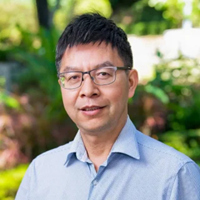
Dr. Weifa Liang received the PhD degree from the Australian National University (ANU) in 1998, the ME degree from University of Science and Technology of China (USTC) in 1989, and the BSc degree from Wuhan University, China in 1984, all in Computer Science. He is a Fellow of IEEE and Full Professor in the Department of Computer Science at City University of Hong Kong (CityUHK). Prior to joining CityUHK in 2021, he was a Full Professor in the Australian National University (ANU) and worked there over 23 years. His research interests include design and analysis of energy efficient routing protocols for wireless ad hoc and sensor networks, Internet of Things and Digital Twins, machine learning and LLM, cloud and edge computing, Network Function Virtualization (NFV), design and analysis of parallel and distributed algorithms, approximation and online algorithms, combinatorial optimization and graph theory. He has been actively publishing high quality papers in the prestigious venues including top journals (e.g., TON, TMC, TPDS, TC, TKDE, JVLDB, JSAC, TCOM, TWC, JPDC, Theoretical Computer Science) and conferences (e.g., INFOCOM, ICDCS, ICDE, ICPP, IPDPS, WWW, PerCom). He has co-authored over 300 papers so far, and his work has been cited over 13,000 by Google Scholar with Google Index 62. His research is funded by the Research Grants Council of the Hong Kong Special Administrative Region, China, and Australian Research Council (ARC) in the past. He currently serves as an Associate Editor for Pervasive and Mobile Computing Journal, Elsevier. He is a member in the Steering Committee of IEEE Transactions on Big Data, and a member in the Executive Committee of IEEE Technical Committee of Distributed Processing (TCDP). He is a Distinguished Contributor to the IEEE Computer Society, and one of the pioneers in the development of Parallel Graph Theory Algorithms in China in the early of 1990s
Talk Title: From Sensing to Insight: Applied AIoT Projects and Demonstrations at the Acadia AIoT Research Hub (AARH)
Abstract: The Acadia AIoT Research Hub (AARH) brings together sensing, embedded systems, connectivity, and artificial intelligence to address practical challenges in health, the environment, and smart systems.
This talk will introduce a selection of the hub’s current projects, including gastrointestinal motility monitoring using capsule-based sensors and physical simulation, real-time freshwater contamination monitoring, and other sensor-driven applications. Through demonstrations of prototypes, data-collection workflows, and analytics, the talk will illustrate how research teams move from physical measurements to meaningful, actionable interpretations.
The talk will also explore the engineering decisions, system integration, and interdisciplinary collaboration required to develop AIoT technologies that are reliable, practical, and useful beyond the laboratory.
About the Speaker
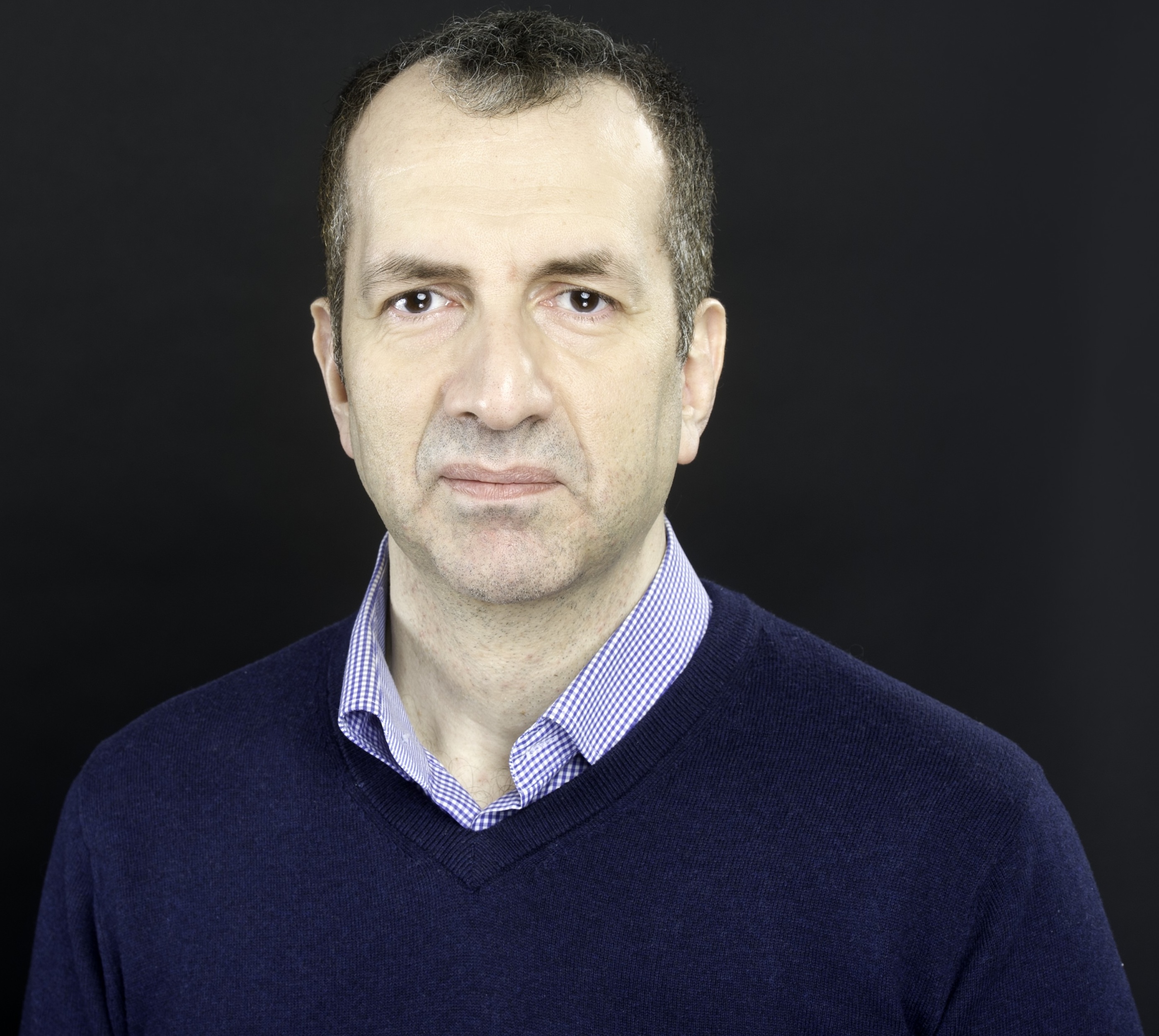
Dr. Esteve Hassan an Associate Professor in the Jodrey School of Computer Science at Acadia University, where he leads innovative research and instruction in the fields of the Internet of Things (IoT), cyber‑physical systems, and machine learning. He earned his Ph.D. in Electronic and Computer Engineering from University College Cork (UCC)-Ireland, following an M.Eng. and B.Sc./M.Sc. in the same discipline. He completed two years of postdoctoral studies at the Tyndall National Institute at University College Cork, followed by another two years at Toronto Metropolitan University (TMU). He also worked as an Assistant Professor at both Brandon and McMaster Universities in Canada.
Dr. Hassan is the founder and head of the Acadia AIoT Research Hub (AARH). His research spans the Internet of Things, embedded and cyber-physical systems, sensing, and artificial intelligence, with applications in healthcare, environmental monitoring, and smart systems. He leads interdisciplinary teams of students and collaborators developing sensor platforms, prototypes, and data-driven methods, including work on gastrointestinal motility monitoring and freshwater quality. His research connects practical system design with real-world deployment and student training.
Dr. Hassan teaches courses in embedded systems, data analytics, and machine learning, and supervises undergraduate and graduate students on applied research projects leveraging wireless sensor networks and smart automation. His collaborative efforts span academia and industry, enhancing real-world impact through technology-driven solutions.
Talk Title: Wearables, Multimodal Data and AI Agents: The New Foundation for Health Management and Disease Prevention
Abstract: Healthcare has traditionally been built on episodic snapshots such as a clinic visit, a lab panel, a questionnaire. Yet the conditions that dominate today's disease burden, such as chronic diseases and neurodegenerative disorders, develop continuously over years and are shaped largely by behavior and environment outside the clinic. Recent advances in wearable devices now enable continuous health monitoring in natural living settings. However, how to effectively interpret wearable data in combination with other health data remains challenging. In this talk, I will introduce how multimodal data, integrating wearable, clinical, genetic, and imaging data, can be effectively leveraged, and how AI agents can be developed to integrate heterogeneous data, reason over longitudinal context, and personalized recommendations for action on modifiable risk factors, translating continuous monitoring into meaningful health management and prevention. Together, wearables, multimodal data, and AI agents form the emerging foundation for a shift from reactive treatment to proactive, personalized, and preventive care.
About the Speaker
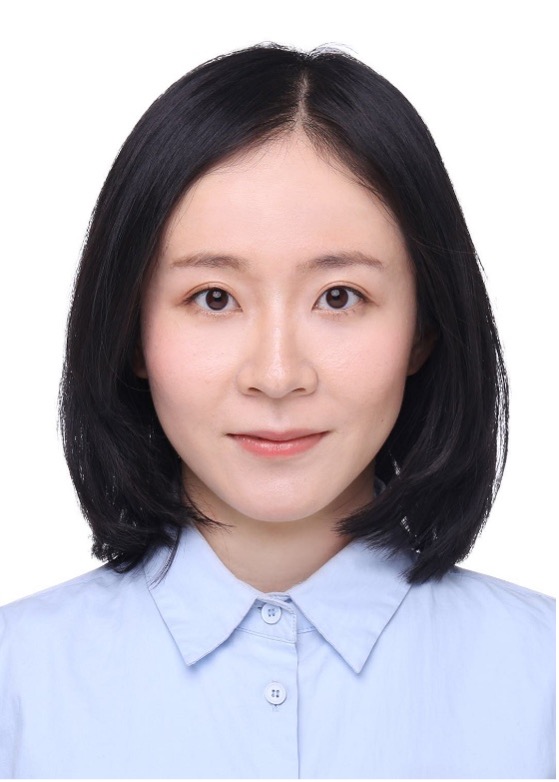
Dr. Li Xinyueli is currently an Associate Professor in the Department of Data Science, College of Computing, City University of Hong Kong. She received her Ph.D. in Biostatistics from Yale University. Prior to her studies at Yale, she spent one year at Peking University and three years at the University of Chicago, where she earned her B.A. and M.S. degrees in Statistics. Dr. Xinyueli’s research focuses on developing novel statistical and computational methods for the analysis of wearable, medical imaging, and multimodal health data. Dr. Xinyueli is a leading researcher in the health data science field, with her work published in high-impact journals, including The Lancet, npj Digital Medicine, Information Fusion, npj Aging, BMC Medicine, Sleep, Diabetes, Statistica Sinica, Statistics in Medicine, etc. She actively collaborates with interdisciplinary research teams across Asia, Europe, and North America, contributing to global efforts in advancing AI for health and AI agents for digital health management, and the broader field of data science in healthcare.
In conjunction with:
 The 17th International Conference on
Emerging Ubiquitous Systems and Pervasive Networks (EUSPN)